


NEWYou can now listen to Fox News articles!
Archaeologists recently uncovered traces of a rare purple dye associated with biblical-era luxury in an unexpected place.
They found them at Roman infant burials sites in England.
The York graves date from the late third or early fourth century A.D. One infant was laid to rest alongside two adults in a stone coffin — while the other was buried in a lead coffin.
SINKHOLE IN HISTORIC CITY REVEALS MEDIEVAL HOSPITAL HIDING JUST BENEATH STREET LEVEL
Researchers recently analyzed the preserved remains and textiles in the burials. Using chemical testing, they found traces of Tyrian purple.
“The babies were wrapped in a fine textile of Tyrian purple embellished with gold thread — a cloth of the highest possible status and luxury known in the Roman world,” an April 30 statement from the University of York noted.
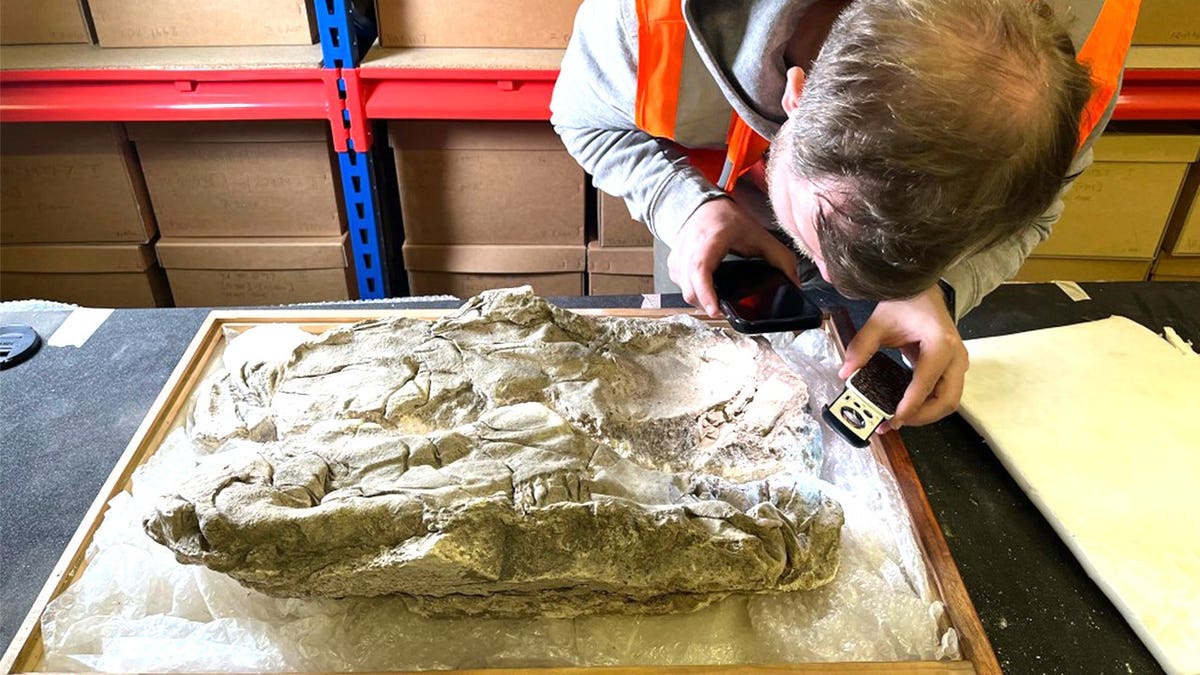
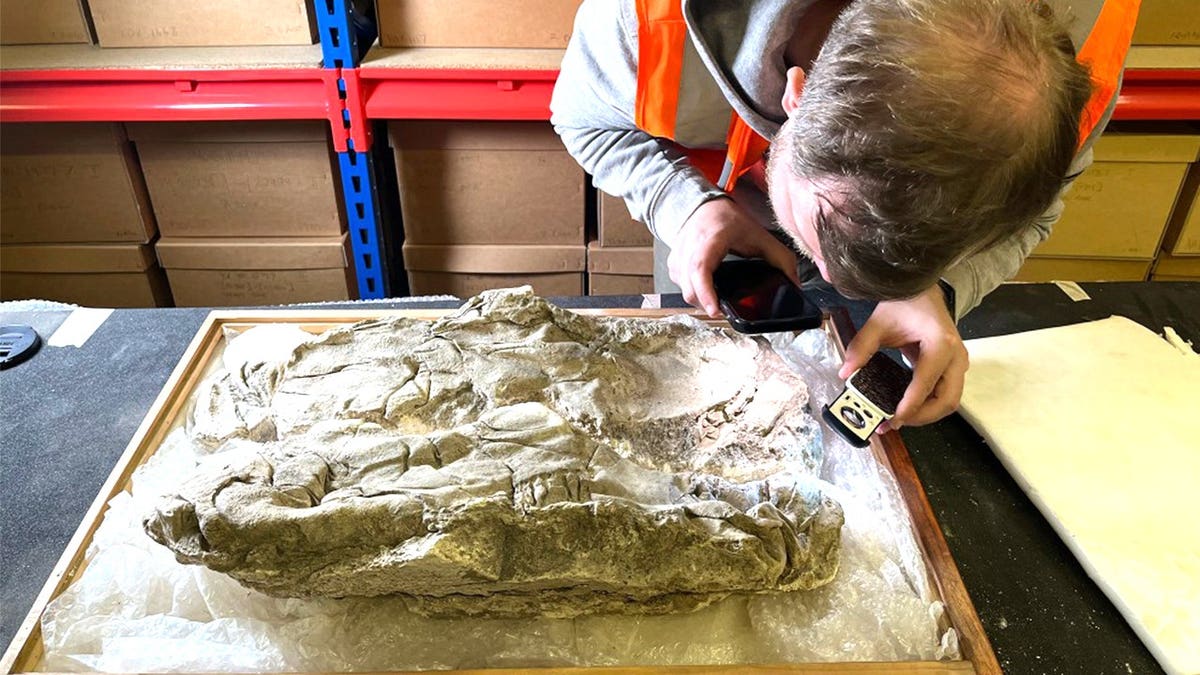
Archaeologists in England uncovered traces of rare Tyrian purple dye in Roman infant burials dating back centuries. (University of York)
The find “suggests the babies were from families of significant social standing,” officials said, adding that the purple cloth was “normally reserved for emperors and members of the aristocracy.”
The university said that “during the Roman period, the dye was a commodity valued at up to three times the price of gold.”
ANCIENT ESTATE TIED TO GROUP IN THE BIBLE UNEARTHED WITH ‘FASCINATING’ TREASURES IN ISRAEL
The dye, harvested by crushing the shells of murex mollusks, was mentioned in the Bible several times.
One biblical reference to purple textiles appears in Acts 16:14, which describes a female merchant.
“It’s one of only a handful of examples of the dye found in the U.K.”
In Mark 15:17, Jesus was dressed in purple cloth by his captors in order to humiliate him, since the color was associated with royalty.
ANCIENT ROMAN FORT YIELDS 2,000-YEAR-OLD FRUIT THAT SURVIVED THE CENTURIES, PLUS OTHER TREASURES
The verse says, “And they clothed him in a purple cloak; and after twisting some thorns into a crown, they put it on him.”
Officials said the textiles survived thanks to the Roman ritual of “pouring liquid gypsum over the clothed and shrouded bodies of the dead.”
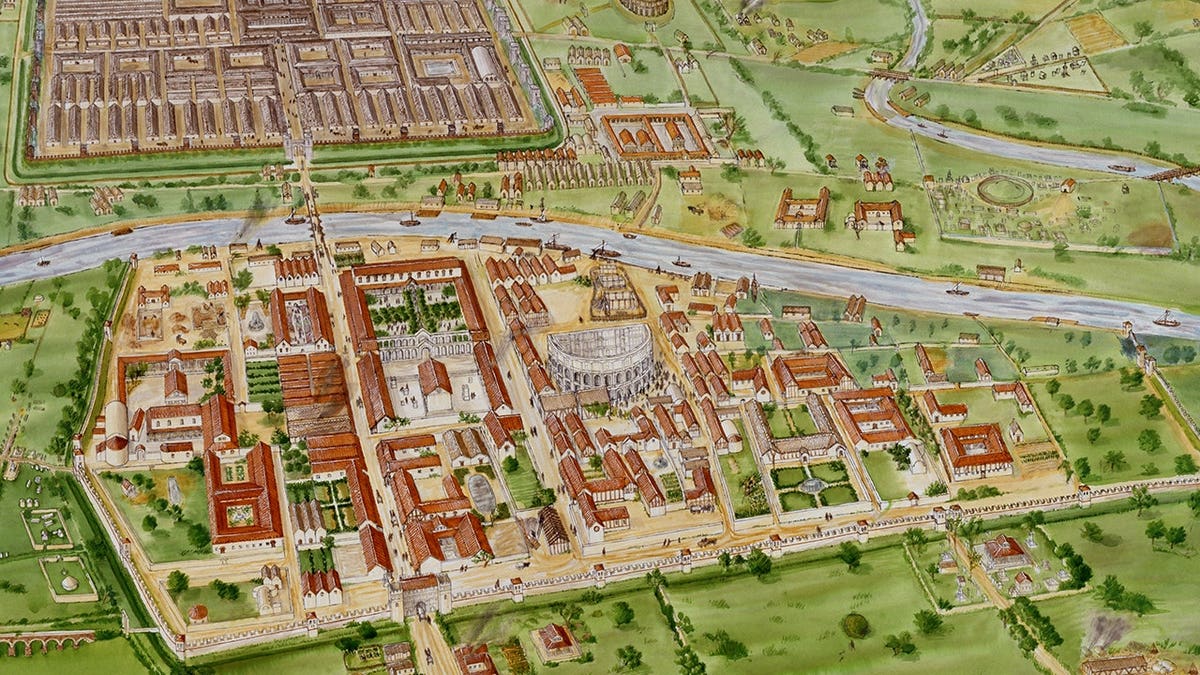
Archaeologists said Eboracum, founded by the Romans around 71 A.D., yielded one of Britain’s rare examples of Tyrian purple. (English Heritage/Heritage Images/Getty Images)
“The gypsum gradually hardened, protecting imprints and fragments of textiles, as well as the dyes and substances originally present in the fabrics,” the release added.
The discovery marks the “first time traces of the dye have been found on Roman textile remains in York,” officials said.
“It’s one of only a handful of examples of the dye found in the U.K.,” the release added.
CLICK HERE TO SIGN UP FOR OUR LIFESTYLE NEWSLETTER
Professor Maureen Carroll, a project director with University of York’s Department of Archaeology, called the discovery “remarkable.”
“For the first time we now have confirmation of the use of this costly dye in Roman York, indicating that the city’s wealthy inhabitants had access to expensive and exotic commodities from the other end of the empire,” said Carroll.
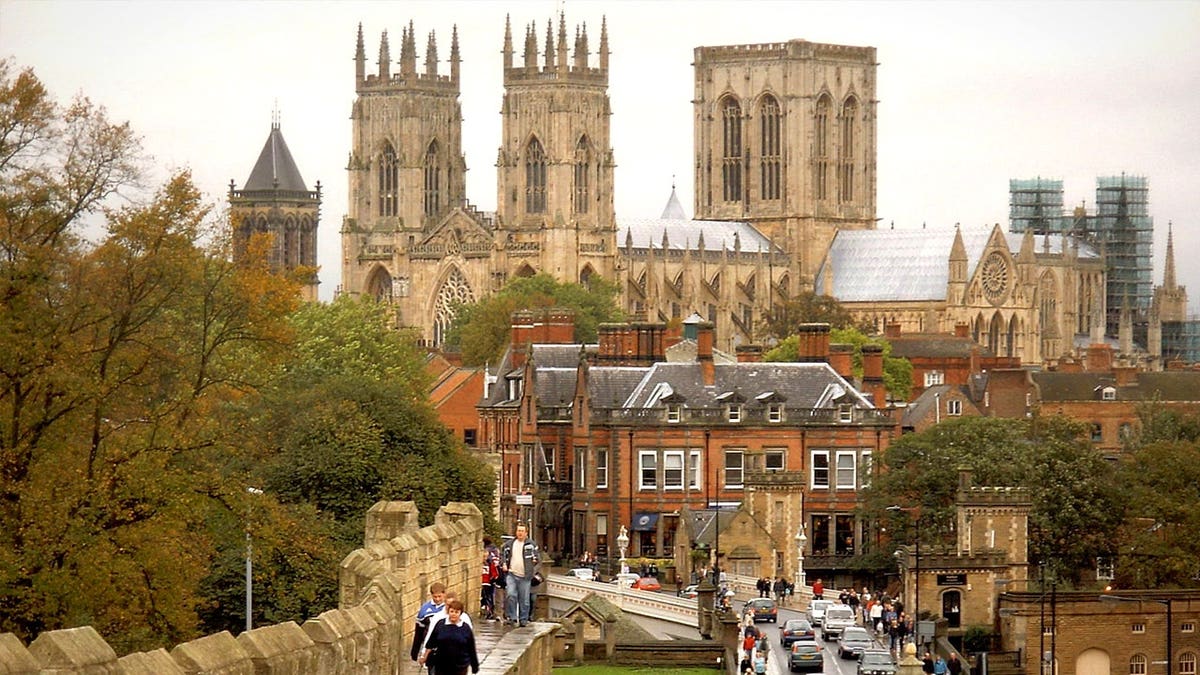
Roman infant graves discovered in York are shedding new light on the presence of wealthy families living in ancient Britain. (Germán Vogel via Getty Images)
The archaeologist added that the research “tells us a lot about the importance of children in Roman York and the willingness of the family to give their baby the best possible send-off in tragic circumstances.”
York, once known as Eboracum in Roman times, was founded around 71 A.D. as a military fortress.
CLICK HERE FOR MORE LIFESTYLE STORIES
It functioned as a provincial capital until the Romans effectively withdrew from Britain in the early fifth century.
Fox News Digital reached out to the University of York for comment.
CLICK HERE TO DOWNLOAD THE FOX NEWS APP
The discovery comes around a year after experts released research about an ancient purple dye factory located in modern-day Israel.
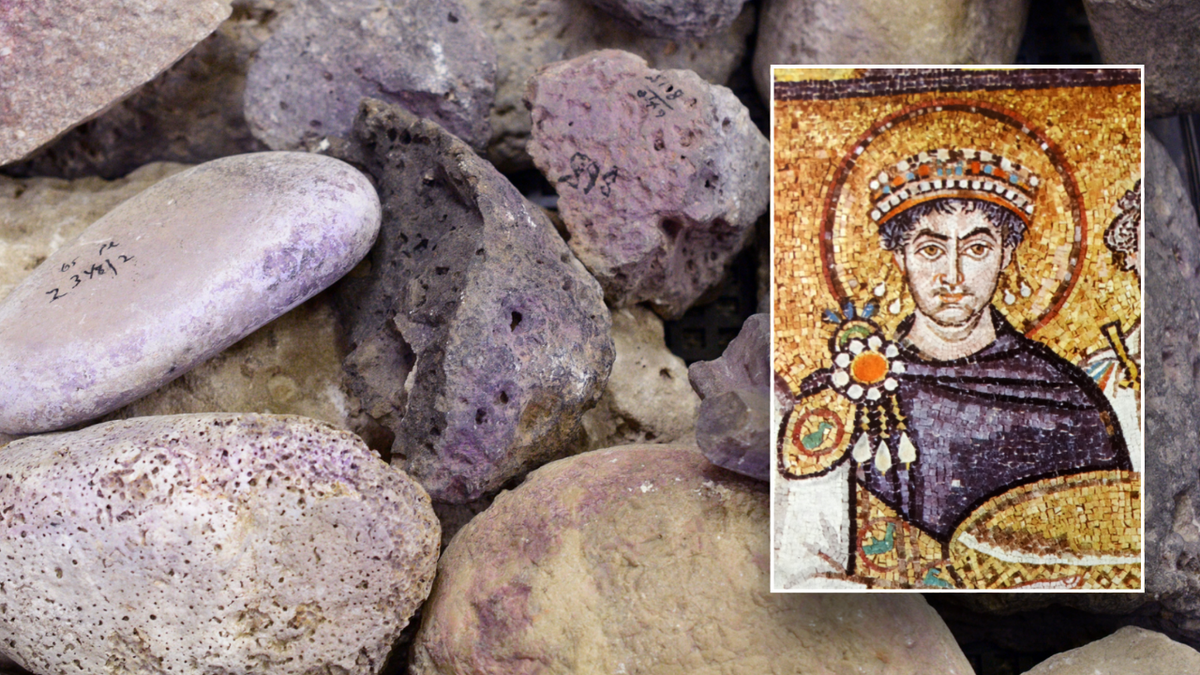
Historians recently unveiled findings about an ancient purple dye factory, highlighting the value of purple dye in ancient times — as seen on the robes of Justinian. (Maria Bukin/PLOS/Getty Images)
The site, Tel Shiqmona, “can unequivocally be identified as a specialized facility for large-scale and long-term production of the lucrative purple dye,” according to the study’s authors.
TEST YOURSELF WITH OUR LATEST LIFESTYLE QUIZ
The site dates back as early as 1100 B.C., and researchers said the site had an “unparalleled” number of artifacts related to purple dye manufacturing.


